Cyprus Digital Nomad Visa: Guide for Living in Limassol
The Cyprus digital nomad visa is a residence permit for non-EU citizens who work remotely for employers or clients outside Cyprus and earn at least €3,500 net a month. It is issued for one year, can be renewed for up to two more, and you apply in person in Nicosia within three months of arriving, with private health insurance and proof of accommodation such as a rental agreement.
Limassol is one of the places in Cyprus where digital nomads most often settle. This guide covers who qualifies, the income rules for families, the document checklist, fees and timing, and the part most guides skip: how to arrange housing in Limassol that works for the application.
What is the Cyprus digital nomad visa?
Officially it is a temporary residence permit for third-country nationals who carry out their work remotely using telecommunications technology. You live in Cyprus, but your employer or clients are abroad. The permit does not allow you to work for a company registered in Cyprus or to serve Cypriot clients.
The number of permits is capped: the Civil Registry and Migration Department (CRMD) states a ceiling of 500, and permits are granted in order of application. The scheme has paused once before when the quota filled, so check that applications are open before you plan around it.
Who qualifies for the Cyprus digital nomad visa
- You are a citizen of a country outside the EU and EEA. EU citizens do not need this visa: they can live and work in Cyprus under free movement rules and register with the Migration Department.
- You are employed by a company registered abroad, or you are self-employed with clients abroad.
- Your work can be done remotely. It does not have to be in IT.
- Your net income is at least €3,500 a month after tax and social contributions.
- You have a clean criminal record, private health insurance and somewhere to live in Cyprus.
If you live on a pension, investments or savings rather than remote work, the visitor residence permit may suit you better: see our guide to the pink slip in Cyprus.
Minimum income for couples and families
Practitioners' guides based on the scheme rules say the €3,500 minimum rises by 20% for a spouse or partner and by 15% for each child. In practice that gives:
| Household | Minimum net income per month |
|---|---|
| Applicant alone | €3,500 |
| Applicant + spouse or partner | €4,200 |
| Applicant + partner + 1 child | €4,725 |
| Applicant + partner + 2 children | €5,250 |
Family members receive permits for the same period as the main applicant, but they cannot work or run a business in Cyprus.
Documents checklist
- Application form MVIS8 (download the current version from the CRMD website).
- Passport valid for at least three months beyond the application, plus a copy of the page with your last entry stamp.
- Employment contract and a letter confirming you work remotely, or contracts with foreign clients if you are self-employed, plus proof the company is registered abroad.
- Proof of income and about six months of bank statements.
- Private health insurance (often called Plan A) covering inpatient and outpatient care and repatriation.
- Proof of accommodation: a title deed or a rental agreement, usually with a utility bill.
- Criminal record certificate from your home country or country of residence.
- Medical tests (blood tests and a chest X-ray) done in Cyprus or certified by a doctor.
- Marriage and birth certificates for family members. Foreign documents need an apostille and an official translation into Greek or English.
How to apply, step by step
- Enter Cyprus as a visitor, with a visa if your nationality needs one.
- Arrange accommodation and health insurance, and collect your documents and translations.
- Submit the application in person (or through an authorised representative) at the CRMD central office in Nicosia within three months of arrival.
- Give your biometrics: in Nicosia or at the district Aliens and Immigration unit of the Police.
- Wait for a decision. The CRMD gives about 5–7 weeks, and you can stay in Cyprus while your application is examined.
- Renew at least one month before the permit expires if you want to stay longer.
Fees and other costs
The official fees are modest: €70 for issuing or renewing the residence permit and €70 for the first registration in the Aliens' Register. The bigger costs are health insurance, medical tests, translations and apostilles, which vary by provider and country, so budget for them separately.
Taxes in brief
The permit and tax residence are separate things. If you spend more than 183 days in Cyprus in a calendar year you will normally become a Cyprus tax resident. New residents can often apply for non-domiciled status, which removes the special defence contribution on dividends and interest. Tax rules change and depend on your home country, so speak to a Cyprus tax adviser before you move.
Finding housing for the visa in Limassol
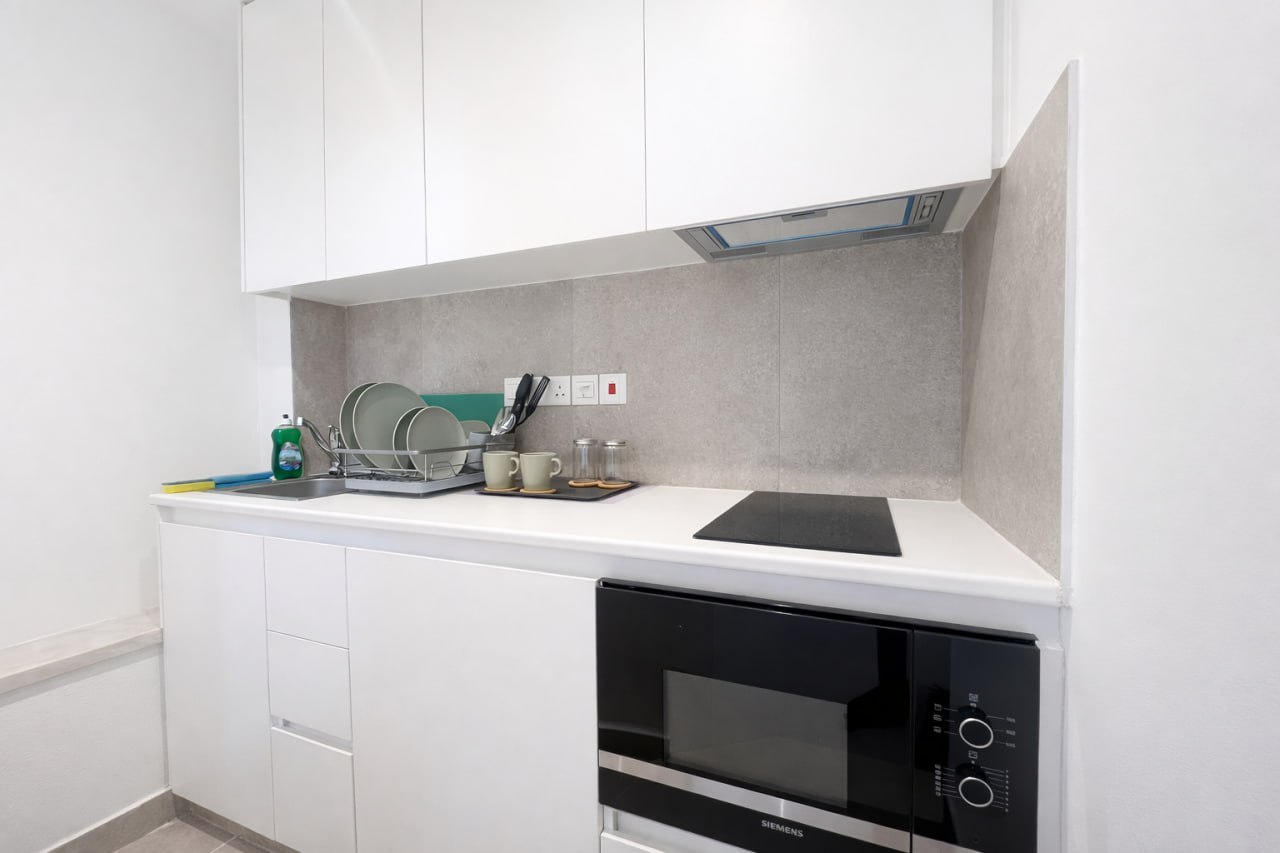
Limassol is about an hour from Nicosia by road, with regular intercity buses, so the trip to the CRMD is easy. The harder part is housing. Long-term flats go quickly, landlords often want a 12-month lease and a deposit, and you may need a place before you have seen many options. A common approach is to start in a furnished monthly studio with bills included, look around the city, and sign a longer agreement once you know where you want to live. Whatever you choose, ask the landlord early whether they can give you a formal rental agreement and the paperwork the CRMD asks for. Our guides to long-term rent in Limassol and the cost of living in Limassol will help you budget.
Where to stay in Limassol on a digital nomad visa
Limassol Heritage is a small boutique hotel of eight studios in Limassol Old Town, 150 m from the sea and three minutes' walk from the Molos promenade. Nightly stays start from €75, which suits your first weeks while you collect documents. For stays of 28 nights or more, studios are rented monthly: a single from €1,100 and a double from €1,300, with all bills, Wi-Fi and weekly cleaning included. For stays of six months or more we provide an official rental agreement that can be used for residence (pink slip) and work permit applications. Tell us your plans in advance and confirm with the Migration Department which documents your case needs.
Moving to Limassol on a digital nomad visa? Send us your dates and we will reply with availability and a monthly quote.
Check availability Monthly stays WhatsAppFrequently asked questions
How much income do I need for the Cyprus digital nomad visa?
At least €3,500 net per month after tax and contributions for the main applicant. Guides based on the scheme rules add 20% for a spouse or partner and 15% for each child.
Can I work for a Cypriot company on a digital nomad visa?
No. Your employer or clients must be outside Cyprus, and you sign a declaration that you will not work for employers or clients based in Cyprus.
How long can I stay on the digital nomad visa?
The first permit is valid for one year and can be renewed for up to two more years, so about three years in total. Apply for renewal at least one month before it expires.
Can my family come with me?
Yes. A spouse or civil partner and minor children can receive permits for the same period, but they are not allowed to work or run a business in Cyprus.
What kind of accommodation do I need?
You need proof of where you live, such as a rental agreement or title deed, usually with a utility bill. Check the current document list with the CRMD, and ask your landlord in advance for a formal agreement.
Will I become a tax resident in Cyprus?
Usually yes if you spend more than 183 days in Cyprus in a calendar year. The permit itself does not decide your tax status, so get advice from a tax professional.
This guide is general information, not legal or tax advice. Rules and fees can change; check the Civil Registry and Migration Department before applying.